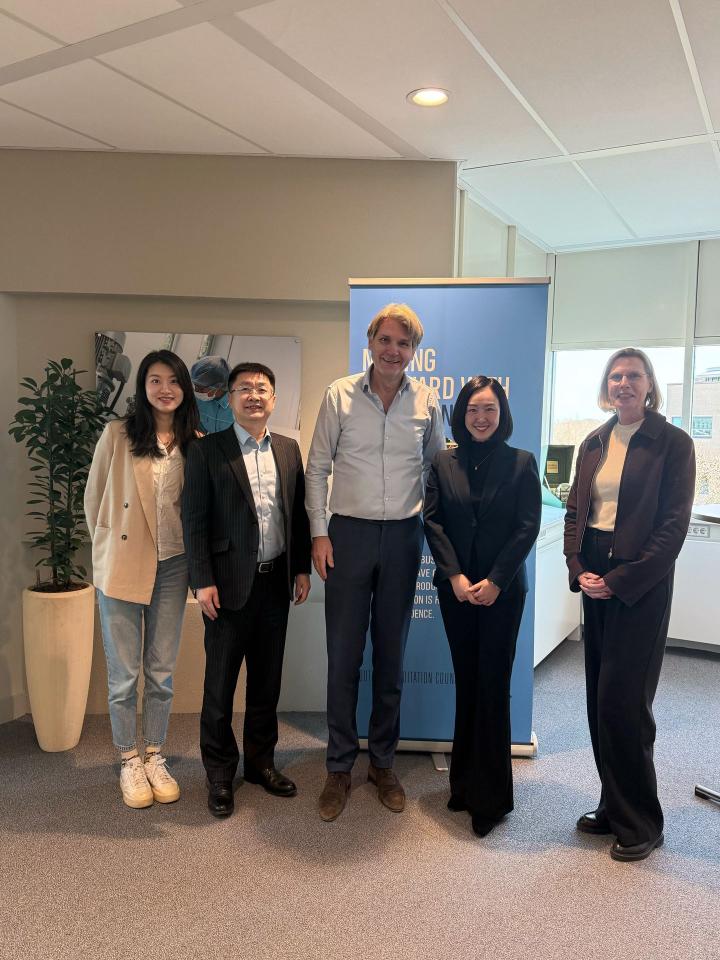
On March 20, 2026, a delegation from CCIC Europe Food Test B.V. visited the Dutch Accreditation Council (Raad voor Accreditatie, or RvA).
The delegation held a working meeting with Roeland Nieuweboer, Chairman of the RvA Executive Board. The two parties engaged in in-depth discussions regarding the development of the Testing, Inspection, and Certification (TIC) industry, accreditation regulations, international mutual recognition, and related technical topics, agreeing to maintain ongoing communication.
During the meeting, Zhou Yubo, General Manager of CCIC Europe Food Test B.V., introduced CCIC Europe's business layout and regional development.
He stated that CCIC has always been committed to providing professional, impartial, and authoritative quality services for international trade, while continuously enhancing core TIC business capabilities.
CCIC Europe Food Test B.V., a subsidiary based in the Netherlands, carries out food testing and compliance consulting services, with a focus on dairy products, infant formula, and Foods for Special Medical Purposes (FSMP). The laboratory has already obtained ISO/IEC 17025 accreditation from both RvA and CNAS.
Zhou Yubo also provided an update on CCIC Europe's progress in accreditation and business qualification preparations. He expressed the desire to maintain close communication with RvA regarding applicable rules, procedural requirements, technical standards, and international mutual recognition mechanisms to further enhance CCIC’s compliance capabilities and professional standards within the European market.
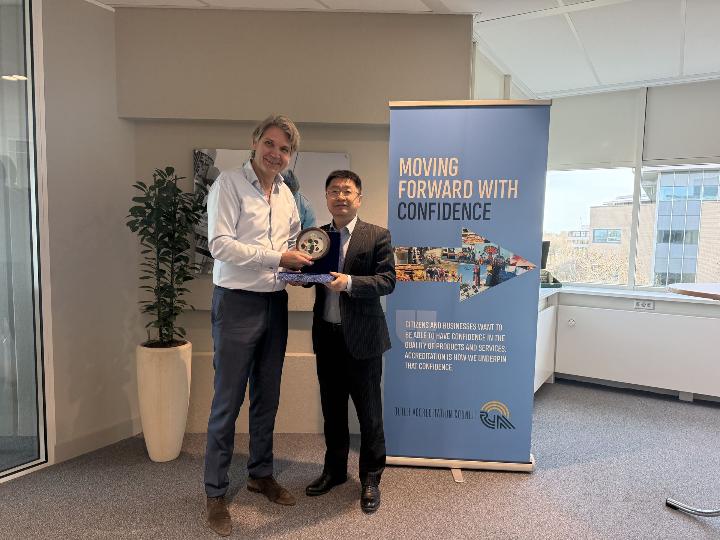
Roeland Nieuweboer introduced the functional role and positioning of RvA as the national accreditation body of the Netherlands, its accreditation processes, and the international mutual recognition mechanisms under the EA, ILAC, and IAF frameworks.
RvA is responsible for the accreditation and continuous supervision of laboratories, inspection, and certification bodies. It focuses on auditing the professional competence, impartiality, and independence of relevant institutions to strengthen public confidence in product and service quality and safety.
Both parties agreed to take this meeting as an opportunity to continue communicating on shared topics within accreditation regulations, technical exchanges, and international business development. Together, they aim to contribute to the improvement of TIC service quality and the facilitation of international trade.